

Maintaining Oral Hygiene While You Are Pregnant

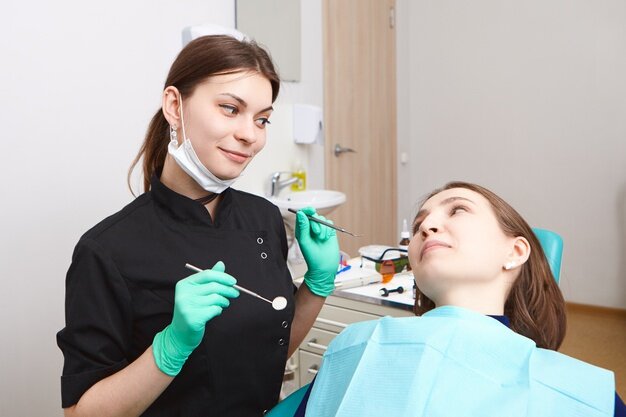
skillful-confident-young-female-dentist-wearing-exam-gloves-white-mask-holding-metal-probe-dental-mirror-ready-examine-oral-cavity-woman-patient-sitting-chair_343059-396.jpg

When you become pregnant, you could see changes in your hormones, especially progesterone which starts increasing and changing. These hormones not only affect the growth of your baby but also perform so many chemical changes inside your body. That’s why it is important to maintain your teeth and gums while you are pregnant. You can also schedule a visit to McKinney TX dentist when you are planning to get pregnant or already pregnant.

Dental Health During Pregnancy

Though changes are not evident in your dental health during the first trimester, you should not slack off your oral routine like brushing, flossing, and rinsing. You may witness swelling into your gums which could lead to other issues such as periodontal (gum) disease and gingivitis in any trimester of pregnancy. An increase in hormones often leads to dry mouth, especially during the night.

It has been found that 10% of pregnant women experience pregnancy granulomas or gum tissue growths. Changes in hormonal balance relax ligaments into your body which also include those in your mouth. So, keep an eye out for any loose teeth. That’s why we suggest visiting your nearby dentist to keep a check on your teeth and gum’s health.

Have a look at additional tips that you should keep in mind throughout your pregnancy:

·         Those who experience morning sickness must rinse their mouth immediately.

·         Change your toothpaste if it is causing you nauseous. You can switch toothpaste brands or change to a mild flavor.

·         Make sure you brush your teeth from both front and back very well during pregnancy.

·         Brush the gum line to avoid pregnancy gingivitis from occurring.

·         Brush properly to prevent teeth and biting surfaces from dental caries (decay).

·         If you have a midnight snack, make sure you brush your teeth again to reduce the chance of cavities.

·         In addition to flossing and brushing, always rinse your mouth with a fluoride mouthwash.

All these important tips and information is crucial not only for you but also for your new baby. Poor dental hygiene has been associated with premature birth and low birth weight in babies.

Oral Health Distresses During Pregnancy

As already mentioned, pregnancy is associated with bodily changes that can result in numerous oral health effects. Your McKinney TX dentist can easily manage your dental condition and suggest you the best solution. They can provide you a solution for:

·         Gingivitis, or swollen and bleeding gums intensified by inadequate home care and hormonal changes during pregnancy.

·         Tooth erosion linked to an increase in the acidity of saliva caused due to morning sickness

·         Cavities caused by the cravings for sugary foods.

·         Pyogenic granulomas, which are round growths on the gums caused due to hormonal changes

You must talk to your dentist about the treatment options available for you because you are pregnant. They will check you thoroughly and confirm if you are really suffering from the suspected condition. If you require more extensive dental work while pregnant, then you can have a treatment during the second trimester. This is because, by the time you reach your third trimester, it would be difficult for you to lie on your back for a long time and get your treatment done.

Apart from brushing, dental experts outline a few steps for an expectant mother to ensure a healthy mouth during pregnancy. These include:

·         Brush twice a day for 2 minutes each time with fluoride toothpaste.

·         Floss every day to get rid of plaque and food debris

·         Eat a balanced diet, limit snacks, and avoid sugary drinks and foods

·         Maintain a plan of regular dental checkups before and during pregnancy for professional evaluation and cleanings if required.

·         Protect your teeth by rinsing your mouth with a mixture of baking soda and warm water to neutralize stomach acids if you are experiencing morning sickness.

·         Follow home care recommendations or essential treatments suggested by your dentist, such as an antibacterial mouth rinse.

Though the world is going through a tough time, dentists are following all safety norms necessary to avoid their patients from getting infected in any case. Pregnant women and their unborn children are more prone to such infections. Make sure you discuss your condition with your dentists so that he/she can make special arrangements for you.

The whole chamber must be sanitized first along with all tools and equipment. This whole process takes around 1-2 hours. In the case of a pregnant woman as a patient, a good dentist takes additional safety measures to avoid risking the life of a woman and her baby.

Even after your baby arrives, make sure you don’t leave your continuity of visiting your dentist. It is necessary even after you deliver your baby as maintaining optimal dental health is your responsibility for which you need to see your dentist at least biannually.  Find out the best and most reputable dentist near you and schedule your visits. Maintaining your oral health is important not only for you but also for your baby no matter you are pregnant or you have delivered your baby. Your pregnancy cannot be an excuse for comprising your oral hygiene. 
How to Prevent Dental Emergencies?

dentist

There is a saying "Precaution is Better than Cure," that means taking care of your health to prevent the occurrence of the different illnesses is better than getting hospitalized later to take treatments to get rid of your illnesses. It is very rightly said. 

The same thing applies when it comes to dental care. If you want yourself and your family members to be orally healthy for a longer time, it is very important to take precautionary steps instead of waiting for the illness to occur. It is so because precautions prevent the occurrence of dental illnesses. 

Let's talk about dental emergencies and what they actually are and how you can prevent those dental emergencies from occurring. Let's take a look below. 

What are Dental Emergencies and What Are Not?

Generally, people get confused about recognizing dental emergencies which further creates problems in taking the right action. Therefore, it is very important to rightly understand what exactly dental emergencies are and what is not so that you can take action accordingly. If you don't know this term, take a look at the below-mentioned definition. 

Dental Emergencies- Any dental issue that is potentially serious and life-threatening requires immediate dental treatment to stop bleeding and alleviate severe pain and infection is considered a dental emergency.

Putting in simple terms, any dental issue that puts you in an uncontrollable situation (like severe pain and gums bleeding), and requires immediate dental treatment is a dental emergency. If you ever find yourself in a dental emergency, immediately contact emergency dentists in McKinney as this is the first and foremost action you need to take after finding yourself in a dental emergency.  

Normal Dental Issues- Unlike dental emergencies, any dental issue that can be controlled or bear by the patient for a few hours and days (such as cosmetic dental problems) is not a normal dental issue and not a dental emergency. 

Now, after reading the above-mentioned definitions, you must have an idea about what dental emergencies are and what are not. 

Here are some of the most common examples of dental emergencies. Let's take a look. 

  • Severe Pain 

  • Gum Infections 

  • Gum Bleeding

  • Tooth Sensitivity

  • Abscessed Gums 

  • Broken Teeth

  • Gum Swelling 

  • Dislocated Jaw

  • Mouth Sores

  • Knocked-Out Tooth

  • Tooth Warm

Some of the most common examples of non-emergency or normal dental issues. Let's take a look.

  • Discolored Teeth

  • Stained Teeth

  • Crooked & Crowded Teeth

  • Unaligned Teeth

  • Bites Disorder (Upper Bites, Lower Bites, Underbites, etc.)

  • And other Cosmetic and Orthodontic dental issues

How to Avoid Dental Emergencies?

Different dental emergencies occurred due to different reasons. For example, deficiency of Vitamin C and Vitamin K and improper flossing, improper teeth brushing, chewing tobacco, and cuts/abrasion from foods are the biggest reasons for gum bleeding. If we work on these causes and ensure we do that appropriately, we can definitely prevent the occurrence of gum bleeding. The same thing applies to other dental emergencies.

So, the best way to prevent the occurrence of dental emergencies is to stay proactive towards your oral hygiene and be cautious about all those causes that can lead to dental emergencies.

Do routine dental check-ups by meeting your concerned dentist at regular intervals. It is very important with the perspective of keeping your oral health in an optimal condition and keeping oral diseases away from you. During your visits to your dentist, your dentist will check up your overall oral health by examining loose fillings, crowns, tooth decay, tooth worms, infection, and gum diseases. If he/she finds any flaw in your oral, he/she will suggest to you what you should do. Of course, you will either have to take some treatments or some medicines as well as you have to do follow-ups during your treatment period.    

Also, do not forget to properly take care of your oral health. It is much more important than anything else. To care for your oral health, simply, you will have to follow the general oral care tips including:

  • Properly brush your teeth two times a day

  • Properly rinse your mouth after eating and drinking

  • Do flossing to remove small food particles from the gaps of your teeth

  • Brush and floss after eating non-vegetarian foods

  • Use mouth freshener to keep your mouth fresh 

  • Do not forget to clean your tongue

  • Be gentle while brushing your teeth as hard brushing can lead to gum injuries

  • Use a soft-bristle toothbrush with a fluoride toothpaste that is approved by the American Dental Association

  • Avoid alcohol-containing and acidic drinks 

  • Avoid tobacco-containing products

  • Don’t eat too many sugary items like chocolates  

If you follow the above-mentioned general oral care tips, you will certainly keep dental emergencies away from you. 

Now, let’s talk about those dental emergencies that cannot be controlled by following oral care tips. 

Dental Trauma

When a tooth gets chipped or knocked out, it is called dental trauma. Descriptively, it is a physical injury to teeth, gums, and soft tissues of the mouth such as lips and tongue. Generally, the most common causes of dental trauma are accidents, including falls & slips, vehicle collisions, and collision or fall during playing an outdoor sport. In some cases, violent incidents such as fighting or physical abuse are the causes of dental trauma. 

Clearly, we don’t have control over dental trauma and it can happen anywhere and anytime without giving indications. That’s why preventing dental trauma is a bit difficult, but yes, we can take some safety precautions to keep dental emergencies away from us. Here are some safety tips:

  • Wear a mouthguard while playing an outdoor sport

  • Always keep a first-aid box in your vehicle 

  • Always try to protect yourself as much as possible when you find yourself in a collision, fall, or slip

Dental Developmental Milestones In Child’s Oral Health

woman-dental-chair-girl-is-examined-by-dentist-doctor-gives-five-patients.jpg

We all have compared different milestones in our children’s lives in their early ages such as height and weight as well as when they first started walking or spoken a word. But do we ever care about their dental developmental milestones? Most of us remember when their first tooth erupted as well the problems they have to face due to teething. But does anyone of us remember those strange moments when they started drooling or when they started brushing? As per experts, children's milestones are measured through how and when they learn, speak, move, behave, and play. In oral health, dental developmental milestones are also significant to your child's ability to eat and smile.

Teeth Eruption in Babies

The primary (baby) teeth compete for their development in your infant's jaw even before their eruption. The eruption of the first baby tooth lays the foundation for future dental checkpoints. From baby teeth to wisdom teeth, how much you take care of your child’s oral health will decide the quality of your child's smile, and eventually their overall health. Experts believe that parents should begin dental care of their children as soon as their first tooth erupts. They also suggest that parents should take their children for regular dental visits and continue in suggested intervals to observe homecare and further development. Taking proper care of teeth in infants is important as they hold space for the permanent teeth, enable speech and nutrition, and should be maintained fully until they naturally exfoliate.

Bottle-Feeding, Thumb-Sucking & Brushing Habits

Once the teeth start arriving in your baby’s mouth, protect them as they let the jaw grow. If you take your child to the dentist from the beginning, regular monitoring will help in the early diagnosis of early problems and abnormalities in your child’s growing dental structure. It's important to monitor the following:

·         Administered and supported brushing and flossing

·         Thumb- or finger-sucking effects and cessation

·         Nutrition and baby bottle habit

·         Additional fluoride treatments

Cavities are common in children which is due to lack of proper home care or an improper diet that is high in fructose sugars, mainly when your child is on a bottle feed. Your dentist or dental hygienist can guide you on what should be put in a bottle and when should you discontinue bottle use. Furthermore, they can offer education on oral hygiene and fluoride treatment to avert tooth decay. Finger- and thumb-sucking and use of pacifiers are all normal to some extent, but all these should be instantly stopped if it affects the proper development of proper dental structure including both teeth and jaw. By seeking dental care early, your baby will be on the right track for healthy oral development.

Diverse Dentition

Once your child starts losing baby teeth or primary teeth and the permanent teeth start erupting, then in such a situation, they have a "mixed dentition," which brings specific fears. Your child may begin to take part in sports, show signs of teeth crowding, and make poor selections in their diet. Again, a dental expert will distinguish what preventative or interventional treatment is essential. This may include:

·         A sport's mouth guard to safeguard the teeth and jaw.

·         Recommendation to an orthodontist.

·         Nutritional psychoanalysis to help your child make healthy dietary selections.

·         Fluoride treatment and dental sealants to avoid further decay.

Braces and Wisdom Teeth

Once your child enters his or her teen years, the connection between a healthy mouth and a healthy body starts building up. Teenagers who consider their smile important and make efforts to keep it that way or making it healthy, they should be appreciated. Teenage is ideal to get braces or go for orthodontic treatment for better dental structure and shape. The oral hygiene habits in teenagers for the prevention of gum disease and infections should be a major concern. Moreover, being a parent, you should keep a check on the eruption of wisdom teeth. Your dental expert will provide the tools required to shift to a healthy adult mouth. Apart from this, their major focus will be on the following:

·         Proper diet, nutrition, and exercise.

·         Brushing, flossing, and fluoride use.

·         Monitoring the eruption of wisdom teeth.

·         Referring to an oral surgeon if required.

The most common problem that teenager has to experience is not having enough space in the jaw so that third molars can easily erupt. If this is the case, it is important to get them removed to avoid future problems. Tooth removal can also be performed during infection, pain, and physical effect on adjacent teeth. For those who have had braces, the orthodontist will lookout these teeth by taking a special x-ray and suggesting oral surgery.

Conclusion:

All the above mentioned age-wise procedures show that developmental milestones are important in your child's life, from babyhood to young adulthood. If you understand the significance of these milestones and let your child’s dental health proceed under the guidance of a dental expert, then you will witness a smooth transition in their oral developmental health from infancy to young adult. By beginning dental care at an early age and upholding regular visits to the dentist McKinney, you will be setting your child on the right track for a lifetime of healthy smiles.

Tested Tips On Prepping For And Getting Through Your Child To The Dental Visit

shutterstock_662672152.jpg

Taking kids to the dentist for their next appointment is a daunting task, but it is necessary to maintain and promote excellent oral health and hygiene. For a child, visiting a dentist is not less than a nightmare as different scary instruments, unfamiliar places and weird objects and noises can rattle even the calmest of kids. Moreover, with age and time, your child’s dental structure keeps growing and his/her teeth continue to fall out which may require frequent trips to the dentist. If you know a good pediatrician in McKinney, then you don’t need to worry about handling your kid as they know how to deal with the kids and get them ready for the treatment.

If you choose pediatric dentistry McKinney, in which professionals perform every dental treatment, they will guide you a few steps to ease future visits for your child to the dentist. You must follow the below steps so that your child feels comfortable, confident, and relaxed while visiting the dentist for the next time.

Choose Professional Treatment Only: This is the most important tip to make dental treatment for your kid easy by choosing only professionals. A practitioner who is specialized in treating kids and adolescents may bring additional experience to the table. They are experts at handling fearful patients. Moreover, pediatric dentists design their offices to be kid-friendly. They know the tactics of how to help them calm their nerves.

Start Dental Visits In Early Age: As soon as your child’s first tooth appears, you should start visiting the dentist as it is a great way to reduce anxiety among children. Moreover, they will get used to it before they start facing problems like cavities and others. This will help your child get into the routine of seeing a dentist while he’s still young. It also helps in developing good oral habits cutting his chances of needing extensive dental treatment.

Keep It Simple: When you are preparing your child for a visit especially for the first tie, do not share too many details with them. If you would do so they will keep asking you questions, digging deep to know more about the treatment process which may cause unnecessary anxiety. Always keep a positive attitude while taking your child to the dentist. Never give them false hope. Avoid saying that everything will be fine as your child might lose confidence because he might have to face something bad.

Make Your Child Feel Comfortable: Get a little bit closer to your child or hold his hand during the checkup can give a big comfort to your kid.

Don’t do too much talking: Though it is necessary to calm down your kid through continuous chit-chats in hopes of distracting your child, don't do that.  Let the staff handle them in their own way and introduce the treatment in their own vocabulary.  Let the dentist do the talking as it will help him develop a better relationship with your child.  

Always choose the same dentist: If you are taking your child or dental treatment, make sure you take them to the same dentist every time.  If your kid has been seeing the same doctor since his childhood, he will not hesitate to open us and let the dentist do the checkup calmly. He will develop trust in the dentist with time and this will reduce your struggle of taking your child to the pro for routine checkups. Kids feel uneasy around new people and the same is the case with the dentist. Seeing the same hygienist may boost his confidence and build a sense of trust, making him feel more relaxed.

Choosing a pediatric dentist who is dedicated to the oral health of children and qualified to take care of your child’s teeth should be the best to consider. Pediatric dentists provide wide-ranging oral health care that includes the following:

·         Infant oral health exams, which include a risk assessment.

·         Preventive dental care consists of cleaning and fluoride treatments, along with nutrition and diet recommendations.

·         Habit counseling such as the use of pacifier and thumb sucking.

·         Orthodontics treatment like early assessment and treatment for teeth straightening and correcting an improper bite.

·         Repairing tooth decays, cavities, or defects.

·         Diagnosis of oral conditions connected to diseases like diabetes, asthma, hay fever, congenital heart defect, and attention-deficit/ hyperactivity disorder.

·         Taking care of gum diseases and conditions including ulcers, pediatric periodontal disease, short frenulum, and mucoceles.

·         Taking care of dental injuries such as fractured, displaced, or knocked-out teeth.

You may find several experts performing pediatric dentistry in McKinney, but make sure you choose a reputable and experienced dentist who has specialization in the same. Since every child is different, a good pediatric dentist knows the right approach to deal with the child.  They have a wide range of tactics to help a child complete his needed dental treatment. The dental expert makes a recommendation on behavioral regulation tactics for the child depending on health history, dental needs, special health care needs, type of treatment needed, emotional and intellectual development, the consequences of no treatment, and parental predilections.

What To Do When You Meet A Dental Emergency?

happy-young-female-patient-sitting-dental-chair-gesturing-ok-sign_23-2147862054.jpg

When meeting with a dental emergency, most times people panic and get confused about what to do and what not to do and whether to meet an emergency dentist or schedule an appointment with a dentist. Some people take it very lightly considering it a minor dental problem while some people do panic and take inappropriate decisions. Both are inappropriate actions as these actions can worsen the situation. 

Generally, when you don’t have enough knowledge and understanding about how to wisely deal with different dental emergencies, you commit these mistakes. And therefore, it is very crucial to learn the first-aid treatments and the dos and don’ts for different dental emergencies. These learnings help you in making wise decisions and keeping away the dangers from you.  

In this comprehensive guide, you will learn what you should do in different dental emergencies. But, before we move to that part, let’s discuss what should be considered as dental emergencies. It is very crucial to rightly recognize dental emergencies as it helps in rightly taking early actions.

What Are Considered as Dental Emergencies? 

According to the American Dental Association (ADA), any dental situation which is potentially life-threatening and requires immediate treatments are dental emergencies. 

Putting in general terms, any dental problem that puts you in severe pain and you cannot afford to wait for a few hours or few days for treatment are dental emergencies. 

Here are some of the most common examples of dental emergencies:

  • Severe toothache 

  • Bleeding gums 

  • Fractured teeth & jaw 

  • Dislocated jaw

  • Abscesses 

  • Pain while chewing 

  • Inflammation around teeth

  • Accidental trauma to teeth

These dental situations are considered as dental emergencies and must be treated right away.

What to Do During Dental Emergency?  

Call Emergency Dentist Right Away- Whatever the dental emergency is, this is the most common action you must go for right away. Probably, finding the most suitable emergency dentist near you can be a little tougher, but you will have to find out the best local emergency dentist quickly so that you can get emergency dental treatment quickly. 

Today, we all have the internet and you can take help from it to find a local emergency dentist in no time. If you are a resident of McKinney TX, you need not worry as you can easily find many highly qualified emergency dentist in McKinney TX

Rightly Recognize the Dental Problem- Rightly recognizing the dental problem is very crucial with the perspective of taking the right action right away. Now, the question is; How to rightly recognize the different emergency dental problems?

It is actually not a big deal. You can easily recognize what kind of emergency dental problem you have. If you face any difficulty to rightly recognize the dental problem, it is better to wait for the emergency dentist to come and make an inspection. 

Severe Toothache- Rinse With Salt Water- Whenever you suffer from severe toothache, rinse with salt water, and repeat the same three to four times a day. It is one of the best home remedies to treat severe toothache. Of course, it cannot treat the problem, but yes, it can give you relief from extreme toothache. Therefore, it is the best way to deal with severe toothache. 

In case, if saltwater does not work for you, the second option is to take a cold compress. It is another good way to treat severe pain. 

You can also apply these two instant dental treatments when you have swelling in your gums and jaw. These can reduce the swelling to some extent. 

 Broken Teeth- Immediately Visit the Emergency Dentist- Teeth can be broken while playing an outdoor sport, meeting a road accident, and slipping or falling on the floor. If you face this dental emergency, you should immediately visit the emergency dentist as he/she only can provide you an instant treatment. However, you should not forget to collect and carry the broken parts of your teeth to the dentist.  

If your gums and jaws are bleeding due to the breaking of teeth, take preventive treatments as soon as possible. Rinse your mouth with cold water and apply some preventive home remedies.

Apart from these dental emergencies, if you meet any dental emergencies, you should not try to do much by yourself, rather you should immediately visit the nearest emergency dentist. It would be a better approach.