

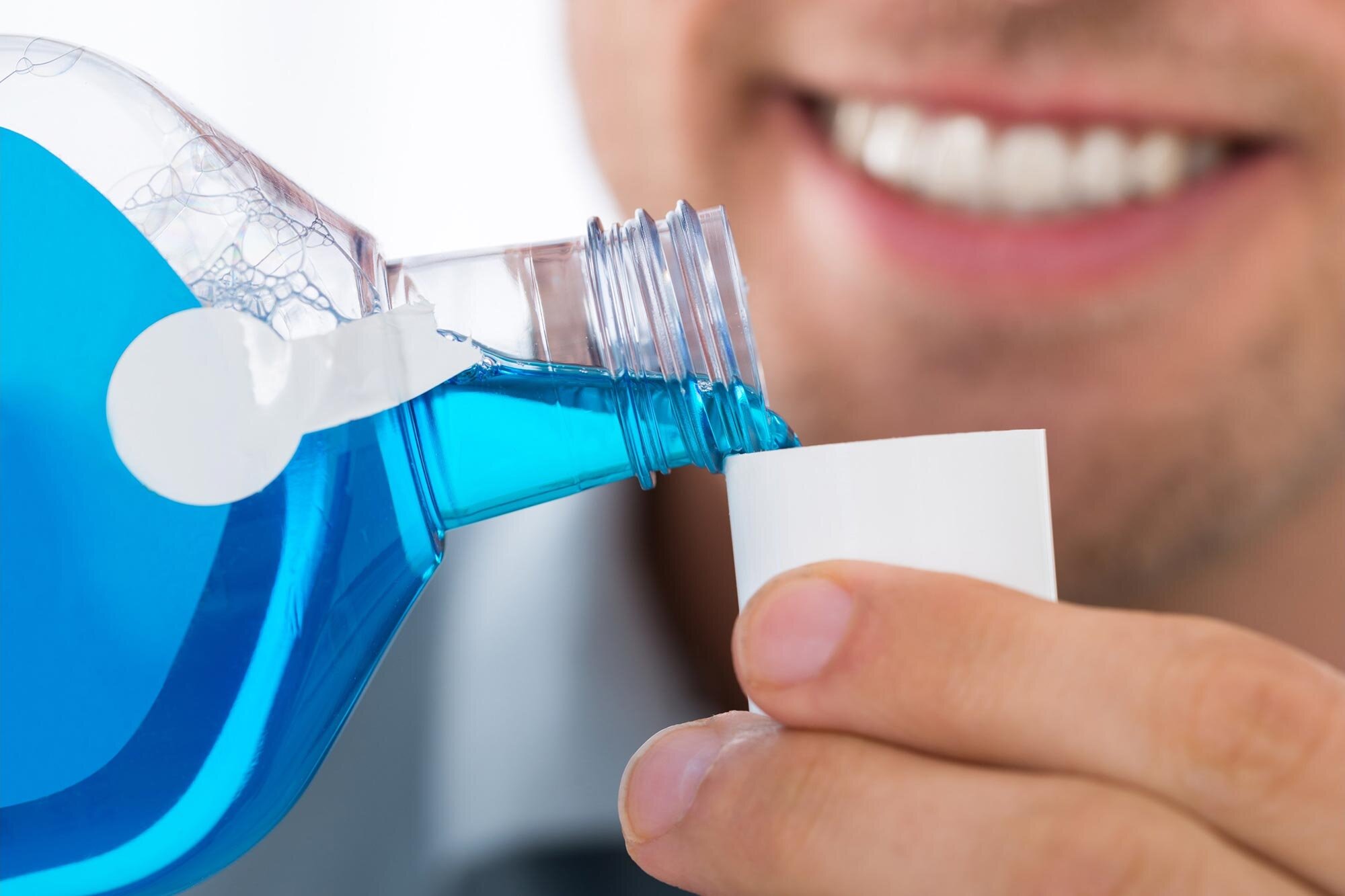
For most healthy adults, alcohol-free mouthwash reduces plaque and gum inflammation about as well as alcohol-based mouthwash. The active ingredient matters more than the alcohol. Choose alcohol-free if you have dry mouth or a sore, sensitive mouth, if you're in recovery from alcohol use, or if you have kids at home. Whichever you choose, mouthwash adds to brushing and flossing. It doesn't replace them.
"Should I switch to an alcohol-free mouthwash?" is one of the questions we hear most often in the chair. We first wrote about it in 2021. The research has moved on since then, so we've rewritten this guide from scratch, with sources linked so you can check them yourself.
What's the difference between alcohol and alcohol-free mouthwash?
The difference is one ingredient: ethanol. Alcohol-based rinses usually contain 14% to 27% alcohol by volume, and Listerine Cool Mint, for example, is 21.6%. Alcohol-free rinses use a water-based formula instead.
What surprises most patients is that the alcohol isn't the main germ-fighter. In rinses like Listerine, it dissolves the essential oils (eucalyptol, menthol, thymol and methyl salicylate), helps carry them into plaque, and keeps the product from spoiling. The oils do most of the work. Alcohol-free rinses use other active ingredients, such as cetylpyridinium chloride (CPC), fluoride, or alcohol-free versions of the same essential oils.
| Alcohol-based | Alcohol-free | |
|---|---|---|
| Alcohol content | 14–27% | 0% |
| Main active ingredients | Essential oils | CPC, fluoride, essential oils or peroxide |
| Plaque and gum inflammation | Proven in ADA-accepted products | Matched the alcohol version in a 6-month trial |
| How it feels | Strong burn | Mild |
| Dry or sensitive mouth | Can sting | The gentler choice |
| In recovery from alcohol use | Not recommended | Safe choice |
| Breathalyzer test | Can read positive for about 15 minutes after rinsing | No effect |
| Tooth-colored fillings and bonding | May soften or dull them faster in lab tests | Gentler in lab tests |
s alcohol-free mouthwash as effective?
Yes, for the jobs most people use mouthwash for. A 6-month randomized trial followed 348 adults who added an essential-oil rinse to brushing and flossing. Gum inflammation dropped 28.2% with the alcohol version and 26.7% with the alcohol-free one. Plaque fell 37.8% and 37.0%.
The gap between the two rinses wasn't statistically significant, and both beat brushing and flossing alone. Two honest caveats:
Johnson & Johnson, which made Listerine at the time, paid for the trial.
A shorter 3-day study, in which volunteers stopped brushing, found the alcohol version held back plaque slightly better. Everyday life looks more like the 6-month trial, where people brush, floss and rinse.
Whether the product does anything at all matters more than the alcohol. The American Dental Association sorts rinses into two groups:
Cosmetic rinses freshen breath and leave a pleasant taste for a while, but they don't fight the bacteria behind bad breath.
Therapeutic rinses contain active ingredients that reduce plaque, gingivitis, bad breath or cavities.
Look for the ADA Seal of Acceptance on the label. To earn it, a company has to show the ADA evidence that its product is safe and works.
Does alcohol mouthwash cause dry mouth?
Probably not for most people, but it can bother a mouth that's already dry. The claim is everywhere, yet controlled studies haven't backed it up for short-term use:
In a 2018 randomized trial summarized in the ADA's journal, 163 adults rinsed twice a day for a week. Dry-mouth scores were no worse with alcohol than without it.
In a study of more than 150 adults, saliva flow and pH 30 minutes after brushing were similar with an essential-oil rinse, with or without alcohol, or with plain water.
Those studies looked at people who didn't already have dry mouth. If you do, from medication, diabetes, Sjögren's syndrome or radiation treatment, alcohol rinses often sting. The ADA suggests an alcohol-free rinse for you. Fluoride is a good choice too, because low saliva raises your risk of cavities. Our guide to dry mouth covers causes and treatments.
Does alcohol mouthwash cause oral cancer?
There's no proven link, but people who smoke or drink heavily may want to play it safe. The worry makes sense. Your body breaks ethanol down into acetaldehyde, which is linked to cancer, and studies show acetaldehyde in saliva rises for a few minutes after an alcohol rinse.
The evidence on cancer itself is mixed:
A 2019 systematic review of 8 studies covering more than 43,000 people concluded that mouthwash can't be shown to cause head and neck cancer on its own.
The same review found higher risk estimates in people who rinse two or more times a day, and in people who also smoke or drink. The authors wrote that risk rises when mouthwash use comes on top of other cancer risk factors.
The ADA cites a review and meta-analysis that found no link between mouthrinse use and oral cancer, including alcohol-containing rinses.
Our take: if you don't smoke and drink only lightly, there's no evidence you need to give up your alcohol rinse. If you smoke, use other tobacco or drink heavily, choose alcohol-free. It costs nothing and removes one question mark.
Is a stronger germ-killing rinse always better?
Not necessarily. Your mouth is home to hundreds of kinds of bacteria, and many of them help you. Two lines of research suggest that wiping them out every day has trade-offs:
Microbiome shifts. In a 2024 study, 59 men used Listerine Cool Mint daily for 3 months. Two bacteria linked to gum disease and some cancers, Fusobacterium nucleatum and Streptococcus anginosus, became more common. The group was small and specific, the researchers said people shouldn't stop using mouthwash because of it, and the manufacturer disputed the methods.
Blood pressure. Some mouth bacteria turn nitrate from vegetables into nitric oxide, which helps relax blood vessels. In a 2013 study of 19 healthy volunteers, a week of chlorhexidine, a strong prescription rinse, cut that conversion by 90% and raised blood pressure slightly.
Neither study proves that everyday use of a drugstore rinse causes harm. They are a good reason to use mouthwash for a purpose, such as calming gum inflammation, preventing cavities or easing dry mouth, rather than out of habit.
Who should choose alcohol-free mouthwash?
We recommend alcohol-free if any of these apply to you:
Dry mouth from medication, diabetes, Sjögren's syndrome or radiation treatment.
A sore or sensitive mouth, such as burning mouth syndrome, mouth ulcers, irritated gums or tissue healing after treatment.
Recovery from alcohol use. Some rinses contain more alcohol than wine, so it's simplest to keep them out of the house.
Smoking or heavy drinking, so you aren't adding another alcohol exposure (see the cancer section above).
Pregnancy. Many patients prefer to avoid alcohol products while pregnant. An alcohol-free fluoride rinse is an easy swap, and you can ask us or your OB if you're unsure.
Religious or personal reasons for avoiding alcohol.
A job with breath-alcohol testing. An alcohol rinse can trigger a positive breath test within about 15 minutes. It doesn't raise your blood alcohol, but alcohol-free avoids the hassle.
Lots of tooth-colored fillings, bonding or veneers. Lab studies suggest alcohol-free rinses are gentler on these materials.
Kids are a special case. The ADA says children under 6 shouldn't use mouthwash unless a dentist recommends it. Young children can swallow a lot of it, which can cause nausea, vomiting and, with alcohol rinses, even intoxication. Keep alcohol rinses out of reach. For older kids who need a rinse, an alcohol-free fluoride formula is the usual choice, and our pediatric dentistry team can advise.
When is alcohol-based mouthwash fine?
If your mouth is healthy, nothing on the list above applies, and you like the strong, clean feel, there's no proven reason to switch. Pick one with the ADA Seal and use it as the label directs.
How to choose a mouthwash for your goal
Read the active ingredients, not the front of the bottle. Here's what to look for:
| Your goal | Look for | Good to know |
|---|---|---|
| Fewer cavities | Fluoride, often listed as sodium fluoride | Don't eat or drink for 30 minutes afterward |
| Healthier gums, less plaque | Essential oils or CPC | CPC can cause brown staining over time |
| Fresher breath | CPC, essential oils or chlorine dioxide | Cosmetic rinses only mask odor for a while |
| Dry mouth relief | Alcohol-free dry-mouth rinse, or fluoride | See our dry mouth guide |
| Healing after gum treatment or surgery | Chlorhexidine, by prescription only | For short-term use; can stain teeth and change taste |
| Whiter-looking teeth | Hydrogen peroxide | Helps with surface stains only |
How to use mouthwash the right way
Mouthwash only helps on top of good brushing and flossing. To get the most from it:
Use it at a different time from brushing. Rinsing right after you brush washes away the concentrated fluoride your toothpaste leaves behind. The UK's NHS suggests another time of day, such as after lunch. The ADA says the order is largely personal preference, so follow your product's label if it says otherwise.
Use the amount on the label and swish for as long as it says, usually 30 to 60 seconds.
Spit it out. Don't swallow it.
Don't rinse with water afterward. Water dilutes the active ingredients.
Wait 30 minutes after a fluoride rinse before you eat or drink.
Frequently asked questions
Is alcohol-free mouthwash better than regular mouthwash?
For most people, neither is clearly better at reducing plaque and gum inflammation, and a 6-month trial found they worked about the same. Alcohol-free is the better choice if you have dry mouth, a sensitive mouth, or a reason to avoid alcohol.
Can I use alcohol mouthwash every day?
Yes, if your mouth is healthy and you follow the label. Research hasn't proven a cancer link from regular use. Risk estimates were higher in people who rinse two or more times a day and also smoke or drink, so if that's you, switch to alcohol-free.
Does the alcohol in mouthwash kill more germs?
Not on its own. In most rinses, alcohol dissolves and carries the active ingredients, such as essential oils, and acts as a preservative. Alcohol-free versions of the same oils worked about as well in a 6-month trial.
Can mouthwash make me fail a breathalyzer?
An alcohol rinse can cause a positive breath reading for about 15 minutes after you use it. It doesn't raise your blood alcohol level. Alcohol-free mouthwash has no effect.
Can kids use mouthwash?
Not under age 6 unless a dentist recommends it, because young children may swallow it. For older kids who need a rinse, an alcohol-free fluoride formula is the usual choice.
Should I use mouthwash before or after brushing?
Ideally at a different time, such as after lunch, so you don't rinse away your toothpaste's fluoride. If your product's label says otherwise, follow the label.
Which mouthwash does Valley Creek Dental Care recommend?
It depends on your gums, your cavity risk and any medications you take. Ask us at your next cleaning and we'll suggest a specific product.
Not sure which rinse is right for you?
At your next preventive care visit, we'll recommend a mouthwash based on your gums, cavity risk and medications. New to Valley Creek Dental Care? See our new patient information, call 972-542-8006 (24/7 scheduling), or book online. We're at 2530 Eldorado Parkway, Suite 100, McKinney, TX 75070.


