
What To Do When You Meet A Dental Emergency?

happy-young-female-patient-sitting-dental-chair-gesturing-ok-sign_23-2147862054.jpg

When meeting with a dental emergency, most times people panic and get confused about what to do and what not to do and whether to meet an emergency dentist or schedule an appointment with a dentist. Some people take it very lightly considering it a minor dental problem while some people do panic and take inappropriate decisions. Both are inappropriate actions as these actions can worsen the situation. 

Generally, when you don’t have enough knowledge and understanding about how to wisely deal with different dental emergencies, you commit these mistakes. And therefore, it is very crucial to learn the first-aid treatments and the dos and don’ts for different dental emergencies. These learnings help you in making wise decisions and keeping away the dangers from you.  

In this comprehensive guide, you will learn what you should do in different dental emergencies. But, before we move to that part, let’s discuss what should be considered as dental emergencies. It is very crucial to rightly recognize dental emergencies as it helps in rightly taking early actions.

What Are Considered as Dental Emergencies? 

According to the American Dental Association (ADA), any dental situation which is potentially life-threatening and requires immediate treatments are dental emergencies. 

Putting in general terms, any dental problem that puts you in severe pain and you cannot afford to wait for a few hours or few days for treatment are dental emergencies. 

Here are some of the most common examples of dental emergencies:

  • Severe toothache 

  • Bleeding gums 

  • Fractured teeth & jaw 

  • Dislocated jaw

  • Abscesses 

  • Pain while chewing 

  • Inflammation around teeth

  • Accidental trauma to teeth

These dental situations are considered as dental emergencies and must be treated right away.

What to Do During Dental Emergency?  

Call Emergency Dentist Right Away- Whatever the dental emergency is, this is the most common action you must go for right away. Probably, finding the most suitable emergency dentist near you can be a little tougher, but you will have to find out the best local emergency dentist quickly so that you can get emergency dental treatment quickly. 

Today, we all have the internet and you can take help from it to find a local emergency dentist in no time. If you are a resident of McKinney TX, you need not worry as you can easily find many highly qualified emergency dentist in McKinney TX

Rightly Recognize the Dental Problem- Rightly recognizing the dental problem is very crucial with the perspective of taking the right action right away. Now, the question is; How to rightly recognize the different emergency dental problems?

It is actually not a big deal. You can easily recognize what kind of emergency dental problem you have. If you face any difficulty to rightly recognize the dental problem, it is better to wait for the emergency dentist to come and make an inspection. 

Severe Toothache- Rinse With Salt Water- Whenever you suffer from severe toothache, rinse with salt water, and repeat the same three to four times a day. It is one of the best home remedies to treat severe toothache. Of course, it cannot treat the problem, but yes, it can give you relief from extreme toothache. Therefore, it is the best way to deal with severe toothache. 

In case, if saltwater does not work for you, the second option is to take a cold compress. It is another good way to treat severe pain. 

You can also apply these two instant dental treatments when you have swelling in your gums and jaw. These can reduce the swelling to some extent. 

 Broken Teeth- Immediately Visit the Emergency Dentist- Teeth can be broken while playing an outdoor sport, meeting a road accident, and slipping or falling on the floor. If you face this dental emergency, you should immediately visit the emergency dentist as he/she only can provide you an instant treatment. However, you should not forget to collect and carry the broken parts of your teeth to the dentist.  

If your gums and jaws are bleeding due to the breaking of teeth, take preventive treatments as soon as possible. Rinse your mouth with cold water and apply some preventive home remedies.

Apart from these dental emergencies, if you meet any dental emergencies, you should not try to do much by yourself, rather you should immediately visit the nearest emergency dentist. It would be a better approach. 

Dental Veneer: Do You Really Need Them?

dental-technician-processes-cast-from-jaw-patient_160315-536.jpg

Dental veneers are thin customized shells of tooth-colored materials crafted to cover the front surface of teeth. These shells are attached to the front of the teeth that are changing their color, shape, size, or length. The idea behind dental veneers is to improve the appearance of the individuals by correcting their teeth. Dental veneers are the most promising solution to help you attain the look you have always wished for. They are the preferred choice for those with chipped teeth, misshaped teeth, or a gap between teeth.

These are as thin as a wafer and in a cover form that adheres to teeth giving them a classy look and perfect shape. Veneers McKinney TX dental experts suggest opting for veneers for different types of problems. Veneers are routinely used to fix:

·         Discolored teeth due to:

  • Root canal treatment

  • Stains from tetracycline or other drugs

  • Excessive fluoride

  • Large resin fillings

  • Worn out teeth

  • Chipped off or broken teeth

  • Misaligned teeth

  • Uneven or irregularly shaped teeth

  • Teeth with gaps

Types of Dental Veneers

Dental veneers can be made from porcelain or resin composite materials.

Porcelain Veneers

A porcelain veneer is a thin shell that is customized to fit on the patient’s tooth. These are several benefits of porcelain veneers:

  • They are strong

  • They are long-lasting

  • They have a natural-looking surface

  • They need lesser tooth enamel remover

  • They don’t stain easily

  • They resist stains better

  • They better mimic the light-reflecting properties of natural teeth

 Composite resin veneers

A composite resin veneer is constructed from a tooth-colored filling material which is attached to the tooth. These also have several benefits like:

·         It requires less tooth enamel removal as compared to crowns or porcelain veneers.

·         It may require fewer visits to the dentist. Sometimes it might take just one visit.

·         It costs lesser than porcelain veneers.

·         It is easy to fix if got damaged; although composite veneers are usually not wear-resistant or strong enough when compared to porcelain veneers.

·         Composite veneers can be repaired quickly and easily.

You need to discuss with Veneers McKinney TX specialist the best choice of veneer material for you.

How Do Veneers Work?

As already mentioned, dental veneers are thin ceramic shells that bond to the front of your teeth. They are applied in the same way as nail appliques are applied. They can last for years if they are properly taken care of. The porcelain (ceramics) material is shaded to the exact shade of whiteness that looks well with your other teeth as well as goes best with your complexion. Recently, technology has advanced so much that it has allowed veneers to possess the exactly similar quality as real teeth, such that even brilliant white smiles can look more natural.

Veneers are an ideal choice for those who want to keep their natural teeth but wished to have more substantial correction than whitening can offer. It is an ideal treatment for those who have significant staining, cracks or chips, wear and tear from aging, or short or mismatched teeth.

What to Expect While Getting Veneers?

Getting veneers requires multiple visits to your dentist for a couple of weeks as it is a multi-step procedure that takes time.  The process of veneers starts with an initial checkup and consultation. Your dentist will check your smile, find out whether veneers are possible on your dental structure and they should continue to discuss the plan or not. If there is any need for fillings or dental implants, then these will need to be taken care of first.

After complete dental evaluation, the experts will prepare your teeth for veneers by shearing a very thin layer of enamel off the front of your teeth. After that, they will take an impression of your new smile and construct a set of temporary veneers that will remain on your teeth until the permanent ones arrive. This will serve as a trial period allowing you to decide whether you want to make changes to the permanent color or shape of veneers. It is more like a “test drive” for your new teeth.

Once the permanent porcelain veneers have been formed, you will have to visit the dentist to get them applied. The temporary veneers are removed and bonding cement is applied to your teeth so that permanent veneers are installed and you are ready to go with a new smile!

Some Precautionary Tips For Invisalign Treatment

woman-smiling-with-hand-holding-dental-aligner-retainer-invisible-outdoor-nature-park_42708-666.jpg

Undoubtedly, Invisalign is the best orthodontics treatment with several benefits. It is clear and transparent in color, easily removable & interchangeable, and very comfortable to wear on teeth the whole day. It is also far better than conventional metal braces. But, despite all of these benefits, it is a bit uncomfortable and painful for the first couple of weeks for patients. It is not easy to comfortably survive that first couple of weeks but to gain a proper alignment of teeth and a pretty smile, it is very important to get across that phase. 

In this guide, we have compiled four Invisalign precautionary tips that you must follow to lower the discomfort of the first couple of weeks of the treatment. Let’s have a quick look at those tips. 

  1. Control Tongue Movement

  2. Keep Invisalign Clean

  3. Carefully Wear and Remove Invisalign

  4. Take Painkillers and Cold Compress to Get Rid of Pain and Swelling 

Control Tongue Movement

The Invisalign is plastic-made clear aligners that have some sharp edges. Although those sharp edges are very light, still those can hurt the tongue. They are the biggest reason for the common tongue sores among dental patients who take Invisalign treatment. It is a bit tough avoiding those tongue sores while taking Invisalign treatment, still, you can avoid those sores by following some precautionary Invisalign tips. 

The first and most important thing you should follow is to control your tongue movement. Many patients repeatedly touch the Invisalign from their tongues and this causes tongue injuries. You should avoid doing this thing. Yes, we know this is a little tough, still, you will have to try your best to control your tongue movement. It would be difficult for the first 2-3 days, but later you will be able to do that very easily. If you face trouble for more than one week, you should consult Invisalign specials McKinney TX. He/she will suggest you doing some suitable practices to control your tongue movement. 

Another best way to avoid tongue injuries is to apply wax on sharp edges & rough spots of Invisalign. Take a small pinch of wax on your finger, then apply on the sharp edges and cover them properly. It is a good technique. You can follow this with the consultation of your concerned dentist. 

In case, if pain and injuries occur despite applying wax and following other precautionary steps, you should use peroxide-based mouthwash. It is very effective to give relief from minor pain, mouth injuries, and irritation during Invisalign treatment. However, before buying this, you should consult with your dentist. 

Keep Invisalign Clean 

Before wearing and after removing the Invisalign from your teeth, don’t forget to properly wash and clean it. It is the must-do task. It is crucial with the perspective of avoiding gum infections and tooth decay. 

To wash and clean your clear aligners, use lukewarm tap water. Take a bowl of lukewarm water, soak your Invisalign into it, and keep it soaked for 10-15 minutes. After that, gently rub Invisalign with soft hands or brush it with an extra toothbrush. Then wash it with clean water. 

You can also use cold water, denture cleaner, or Invisalign cleaning crystals to wash and clean it. Apart from these techniques, there are many different ways you can wash and clean Invisalign. But, we would suggest you choose one of the above-mentioned techniques as these are the safest. 

Carefully Wear and Remove Invisalign 

Most dental patients make mistakes when wearing and removing Invisalign, and these mistakes mainly cause gums and lips injuries. So, you should be careful when wearing and removing Invisalign. If you don’t know the right techniques to wear and remove clear aligners, you should learn from your concerned dentist. 

Here are a few things you should keep in mind when wearing and removing Invisalign. 

  • Use soft hands

  • Be gentle

  • Use your fingertips to support the process

  • Hold the only Invisalign when removing it from teeth 

  • Use your thumbs and index fingers 

  • Thumbs must be inside of the jaw and index fingers must be outside of the jaw when removing

  • Invisalign from teeth 

  • Thumbs must be under the upper teeth to gently push Invisalign when wearing it

  • Use other fingers for support only when wearing it 

Take Painkillers and Cold Compress to Get Rid of Pain and Swelling 

You should always have some painkillers with you when you are taking Invisalign treatment. However, you should not take those painkillers until your endurance stops responding. You should take them only in extremely painful moments. If the pain is like minor pain, you should try some home remedies or natural treatments to get rid of that. 

On the other hand, if Invisalign causes gum swelling, you should take a cold compress from outside of your mouth. It would be really helpful to lower the pain level. What you need to do is take some ice in a cotton cloth, tie it like a bundle, and start pressing on the swelling area from the outside of the mouth. Do this until you feel good. This would certainly help reduce swelling. 

So, these are four precautionary tips for those who are taking Invisalign treatment. You might be taking stress after reading about the injuries, infections, and pain that occurs due to following the wrong techniques of wearing and removing Invisalign and not taking care of it. But you need not worry as these cases are rare. If you rightly use Invisalign and take care of it, you will never face such issues. Still, you need to follow all the precautionary Invisalign tips that are mentioned in this guide. 

MOST COMMON DENTAL INJURIES THAT OCCUR IN SPORTS

dentist-examining-teeth_10069-4752.jpg

When you are involved in any sports, then injuries and scars are parts of this journey. Athletes feel proud of their injuries and marks as these depict their hard work and dedication. If you are an athlete and you have gone through dental injury, then you should immediately consult an emergency dentist McKinney TX as correcting different dental injuries is possible with modern dentistry. You cannot compromise with your oral health and we do not let it happen as maintaining a beautiful smile on every face is what we are aiming for. And when you are a sportsperson, then it becomes essential to correct your injuries so that your smile can always be intact.

Dental emergencies involve instant attention to boot out severe pain, treat the high risk of infection, or save a tooth that is at high risk. Sometimes an accident while playing can knock your tooth out and the emergency is evident, but other times you may experience pain or distress and don’t know what to do. Broken dental equipment, lost fillings, and chipped veneers can be annoying, but they don't call for emergency dental care. Here are some examples of dental injuries where you should act quickly:

CRACKED TOOTH: A cracked or fractured tooth has riotously varying levels of severity. It happens mostly during sports when the player experiences an unexpected blow to the face. Sports authorities of the country estimate that players who don't wear mouthguards are more likely to damage their teeth through these unexpected blows during the competition and a tooth injury caused in this way can result in various long-term problems.

A tooth with longitudinal cracks is known as "craze lines" in the professional language. These are scoring lines in the enamel and do not cause high risk for your dental health. A cracked tooth, on the other hand, comprises of a crack or split that initiates at the crown of the tooth and outspreads downward into the tooth. Given below are some symptoms you might experience with a cracked tooth include:

·         A sharp pain when you bite down, which disperses later.

·         Tooth pain that comes and goes but isn't continuously present.

·         Pain while eating and drinking, particularly when you consume hot or cold foods.

·         Losing a section of the outer enamel shell of a tooth, which revels the dentin and pulp and sometimes the root surface.

·         It is also possible that you don't experience pain at all. This is because a cracked tooth isn't always noticeable to the naked eye; you may only determine it during your next dental checkup.

If you have experienced a vertical fracture near the center of the tooth, it generally won't let you lose a section of the tooth and just expose the tooth pulp. But if the crack prolongs through the tooth, it could affect the cusp, which is the sharp tips of the tooth. In this case, your dentist may make a diagnosis of a cuspal fracture, which will involve either performing root canal treatment or demand having the tooth extracted to avoid bacterial infection.

FRACTURED ROOTS: A tooth injury in sports isn't always restricted to the crown of the tooth. There is a possibility that a blow at the wrong angle can result in a fractured root, first. This happens when a crack starts from the root and travels in the direction of the tooth's chewing surface. Since fractures are often unseen; you might only determine the problem when an infection progresses. The rigorousness of this type of tooth damage depends on the position of the fracture along the root. The faster a patient with a root fracture is given root canal therapy, also known as endodontic treatment to avoid infection in the pulp, the lesser they have to experience necrosis that leads to tooth loss.

TOOTH INTRUSION:  Sports injuries are normally associated with teeth getting cracked, but a tooth can be driven back into the jawbone in its place. This type of suffering is called intrusion, and it happens very rarely in a small percentage of dental injuries that involve permanent teeth. Though these could be more common in primary teeth since a child's alveolar bones, which embrace the tooth sockets, are not tough enough just like in adults. Here are some of the complications that may arise from tooth intrusion:

·         Damage of the tooth pulp, either by due to necrosis or being injured during an accident which is beyond recovery.

·         Root resorption, which is a shortening of the roots. This happens in up to 70% of permanent teeth that are damaged in this way.

·         Ankylosis, which is described as the merging of the root of the injured tooth to the alveolar bone.

If you have gone through a sports-related dental emergency, call emergency dentist McKinney TX. Even though you find their office closed, they would definitely offer you help through emergency numbers mentioned on their website. If your treatment can wait till the next business day, move ahead and leave a message. Most of the dental clinics often leave appointments open for emergency cases and see them first. 

Conventional Dental Braces vs Invisalign

invisalign-vs-braces.jpg

When it comes to teeth straightening, generally dentists prescribe either conventional dental braces or Invisalign to their patients. Both of them are effective teeth-straightening treatments as they are custom-made to attain perfect dental structure. During the treatment period, they slowly shift the misaligned teeth to their right places. And eventually, after a certain period of treatment, the patients get perfect dentures that help them to attain a pretty smile. 

If you are one of those persons who have misaligned, crooked, and crowded teeth, and have decided to opt for treatment of proper teeth alignment, you might be wondering whether you should opt for conventional dental braces or modern Invisalign treatment. This detailed guide will help you understand the difference between conventional dental braces and Invisalign treatment, their pros and cons, and choosing the most suitable teeth straightening treatment for you. Let’s start with the intro part. 

Introduction to Conventional Dental Braces and Invisalign

Conventional Dental Braces- Conventional dental braces are metal-made devices (also known as braces, orthodontic cases, and cases) used to align and straighten misaligned, crooked, and crowded teeth. They position the teeth with regard to the patient’s bite. They fix gaps, underbites, overbites, deep bites, open bites, crossbites, and other orthodontic flaws. They also aim for overall dental health. 

As long as they remain on the surface of the teeth, they constantly put pressure on both teeth and jaw. And this pressure allows teeth to shift and position correctly.

Invisalign- Invisalign is a modernly developed teeth-straightening treatment. According to the Invisalign McKinney specialists, this is one of the biggest examples of the excellence in modern dentistry. These days, it is widely gaining demand and popularity due to its amazing capabilities to treat faster than other treatments. 

It is an alternative to conventional dental braces and much more effective. It is a custom-made plastic teeth tray (also known as clear aligner, clear-aligner treatment), nearly invisible, used to correctly adjust and position the mild to moderate misalignment of teeth. It treats almost all the orthodontic problems such as misaligned, gapped, crooked, and crowded teeth. It also treats the bite's flaws. 

It needs to be worn on the surface of teeth for at least 20 hours a day during the whole treatment period. Like conventional braces, it put force on both teeth and jaws that help in positioning or shifting the teeth correctly.

Conventional Dental Braces and Invisalign- The Differences 

Structure

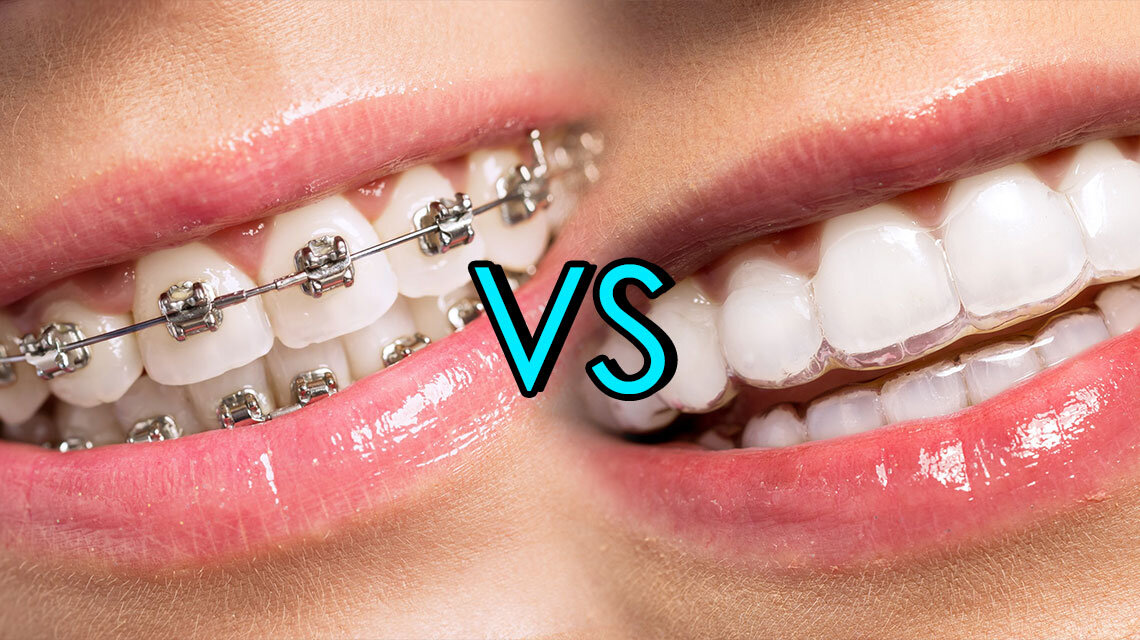
Dental braces consist of metal brackets that are tied together by a metal wire and tiny rubber bands. These are clearly visible devices when putting on teeth.

On the other hand, Invisalign is a plastic form of braces. It does not consist of metal, wires, and rubber bands. It is simply a plastic-made clear aligner. It is almost invisible while wearing on teeth.  

Color

Basically, dental braces come in metallic or silver colors. However, they are also available in enamel color. You can buy that by paying extra money. 

Invisalign is clear and transparent. 

Removable/Irremovable

Dental braces are irremovable due to its specific structure. While eating, drinking, and brushing your teeth, you cannot remove dental braces.

While Invisalign is easily removable and interchangeable. Before eating, drinking, and brushing your teeth, you can easily remove it, and after completing the task you can again wear it. 

Treatment Time

Dental braces are required to be worn 24/7 during the whole treatment period. 

Invisalign is required to be worn 20-22 hours a day during the whole treatment period. 

Cleaning

Dental braces must be nicely cleaned with the help of a toothbrush.

On the other hand, to keep your Invisalign clean, you need to use lukewarm water. 

Follow Up Visits

The patient who is taking dental braces treatment needs to meet the concerned dentist every month during the treatment period.

The patient who is taking Invisalign treatment needs to meet the concerned dentist every two weeks to interchange the clear aligners. 

Effectiveness

Dental braces are more effective for complex orthodontics problems. 

Invisalign is more effective for mild to moderate misalignment. 

Pros and Cons of Dental Braces 

Pros

  • Effective to treat any type of orthodontics problem including mild, moderate, and severe

  • Lesser follow up visits to the dentist

  • Low-cost devices

Cons

  • Irremovable

  • Visible to the third person

  • Discomfort in eating, drinking, and brushing teeth

  • Food can get stuck between metal brackets

  • Reduce the confidence level while speaking in front of some people

  • May have pain and sores from metal brackets, wires, and teeth movement

  • Required frequent cleaning

  • Slow treatment process

Pros and Cons of Invisalign 

Pros

  • Effective in mild to moderate orthodontics problems

  • Easily removable and interchangeable

  • Almost invisible to the third person

  • No difficulties in eating, drinking, and brushing teeth

  • No pain and sores

  • Easy cleaning process

  • Do not reduce the confidence level

  • Treat faster than braces

Cons

  • A bit costly

  • Required frequent interchanging of clear aligner (every two weeks)

Conventional Dental Braces and Invisalign- Which One is Better For You?

Basically, it depends on the complexity of your orthodontics problem whether you should opt for conventional braces or Invisalign. You should leave this on your concerned dentist as he/she knows better what fits you the best. However, due to so many advantages, Invisalign is the first choice of dentists all around the world. They often prefer to prescribe Invisalign to dental patients instead of dental braces. You should also choose it for getting fast and effective results.