
The Consequences Of Smoking On Your Teeth And Gums

The smell of a barbecue and burning leaves is terrific. Cigarette smoke, on the other hand, is not very pleasant. Now everyone is conscious of just how smoking may have a significant negative impact on one's overall health. While the number of individuals who smoke is decreasing, there are still far too many fatalities from tobacco each year. What most people don't consider is how smoking impacts your oral health. It's not only about discolored teeth or terrible breath, however. It's a lot more than that.

What Effects Smoking Has on Your Teeth and Oral Cavity

  • Smoking can impair your sense of smell and taste, and cigarette tar can stain your teeth, darken your tongue, and cause halitosis.

  • Smokers' immune systems are impaired, resulting in weaker immunity against oral illnesses and a lengthier recovery time following dental surgery.

  • Smoking promotes the growth of germs, plaque, and tartar, resulting in cavities, decay, and tooth loss.

  • Mouth Sores and Ulcers: Smokers are more likely to have these frequent oral health concerns.

  • Gum Recession: Smokers with gum disease have receding gums, exposing the crown edges. Smoking may make dental hygiene more difficult and affect the look of their crowns.

  • Oral Cancer: Harmful chemicals in cigarettes, cigars, and smokeless tobacco induce mutations in healthy cells in the mouth and throat, increasing your chance of getting oral cancer, which is one of the most deadly and difficult to treat cancers.

It is crucial to avoid tooth loss.

  • Preventing tooth loss is critical. Chewing difficulties might arise as a result of missing teeth at the rear of the mouth.

  • Losing the front teeth harms your ability to eat, your look, and your speech.

  • Teeth also help to keep the lower half of the face in shape.

Symptoms of gum disease caused by smoking

It's essential to see your dentist for frequent check-ups if you smoke. Gum disease symptoms that McKinney dentist looks out for include:

  • You have gums that are red, swollen, painful, and bleeding.

  • Your gums are releasing a discharge (pus).

  • Gums that have become loose and are pulling away from the teeth.

  • You can have a foul odor or unpleasant breath.

  • Loose teeth. When your teeth are putting together, this might affect the sensation of your bite or cause dentures to fit unevenly.

  • There are gaps between your teeth.

Gum disease seems to be more severe if you smoke

Gum disease has an increased risk:

  • You are comparing someone who smokes less than ten cigarettes per day to those who do not smoke at all.

  • People who smoke heavily are four to five times more likely to develop this condition. If you smoke, you might experience the following:

  • Tooth loss (of some or all of your natural teeth) can make it difficult to chew certain foods, talk effectively, or smile with confidence if they aren't corrected.

  • Gum disease might be more challenging to diagnose. Because tobacco promotes inadequate blood flow to the gums, bleeding gums, typically signs of gum disease, may not be present. Nonsmokers do not react as well to gum therapy (professional dental cleanliness).

  • Alcohol consumption raises the risk of severe periodontal disease.

  • You're more likely to get acute necrotizing ulcerative gingivitis. The disease is a severe disease with a foul odor and flavor.

How to keep smokers' teeth and gums healthy?

If you smoke, there are specific steps you may take to avoid tooth and gum issues, such as:

  • If you decide to quit smoking, talk to your doctor, dentist, or phone Quitline for help.

  • If you're having trouble quitting smoking, consider cutting down on the number of cigarettes you smoke at first.

  • Try to use fluoride toothpaste twice a day to brush your teeth and gums.

  • Cleanse between your teeth once a day with dental floss (for minor gaps) or interdental brushes (for significant gaps).

What Can You Do To Stop Smoking?

Quitting smoking requires a lot of effort, dedication, accountability, and willpower. The Centers for Disease Control and Prevention has a lot of information about quitting smoking, including advice, tactics, and how to stay on track. They also offer a five-step approach to help you stop:

  • Prepare: Make a date for quitting.

  • Require your friends and family for help: Make use of your friends, family, and medical specialists to assist you.

  • Distract Yourself: When the temptation to smoke arises, redirect your attention to anything else (exercise, hobby, etc.).

  • Take medication Only When Necessary: Discuss the advantages of taking pharmaceutical or over-the-counter medicines with your doctor.

How does your body transform after quitting smoking?

  • Your body begins to recover minutes after your last smoke.

  • Your cardiac output decline 20 minutes after you quit smoking.

  • The CO level in your blood returns to an average of the esophagus after you stop smoking.

  • Your blood circulation strengthens, and your lungs perform better two to three months once you quit smoking.

  • The probability of heart disease is half that of a smoker one year after stopping.

  • Your chance of cancer of the mouth, throat, esophagus, and bladder is lowering in half five years after stopping. The chances of cervical cancer are the same as that of a nonsmoker. Within two to five years, your risk of a heart attack may be the same as a nonsmoker's.

Wrapping Up!

It's not even a matter of how long smoking will harm your dental and oral health; it's a question of when. While smoking is the leading avoidable cause of death and disease in the United States, quitting is difficult. Remember that your dental experts are there to assist you with most oral health issues. With regular visits, your dental team can assist you in developing a plan to begin the quitting process while also serving as an essential part of the support system you'll require.

Brushing and flossing your teeth may undoubtedly benefit your smile. You are in charge of the remainder of your oral health. It all starts with putting down the cigarette and choosing health. Lastly, See your dentist regularly. They may provide you tips on how to maintain your teeth and gums healthy, as well as perform routine oral health and cancer screenings.

Tooth Sensitivity- What are the Causes and Possible Treatments?

How do you feel when you take a bite of ice cream or sip a spoon of hot soup? Does it hurt your teeth? Do you feel pain or intense sensation? If so, it is time to get to the bottom of this dental problem. 

What is Tooth Sensitivity or Sensitive Teeth?

To understand what exactly tooth sensitivity is, first, you need to understand the different parts of the tooth. 

Teeth have mainly two parts: the upper part (crown- the part of teeth that can be noticed inside the mouth) and the lower part (root- the part of teeth embedded in the jawbone). The upper part of teeth helps in biting and chewing, while the lower part of teeth helps withstand the force of biting and chewing. Other parts of teeth include: 

Gumline- The line where the gum and teeth meet. 

Enamel- It is a hard layer on the tooth containing mineralized tissues. 

Dentin- It is responsible for the tooth structure and is found underneath the enamel. 

Pulp- It is located in the center of the tooth consisting of nerve tissue and blood vessels. 

Tooth sensitivity mainly has to do with the crown and root. According to expert dentists, the upper part of the teeth is covered with a layer of hard enamel. It protects the inner part of the teeth (dentin and pulp) from being damaged. The roots are covered with a protective material called cementum. If these layers wear down or get damaged, they expose the dentin. When the particles of foods and drinks come into contact with the dentin, they result in pain and intense sensation. This is called tooth sensitivity. 

What Are The Common Causes of Tooth Sensitivity? 

Tooth sensitivity could occur due to many different causes. In some cases, underlying dental problems are the leading cause, while others may develop tooth sensitivity due to the following reasons: 

  • Brushing your teeth too hard or using a hard-bristled toothbrush.

  • Consuming highly acidic foods and drinks.

  • Grinding teeth at night.

  • Gum recession.

  • Broken or chipped teeth.

  • Certain dental treatments. 

Certain health conditions or diseases cause acid to come up from the stomach, leading to tooth sensitivity. It includes Gastroesophageal reflux (GERD), gastroparesis, and bulimia. 

Tooth decay, getting fillings, crown replacement, and teeth bleaching may also cause tooth sensitivity. 

Treatments

Primarily, two types of tooth sensitivity treatments are available in modern and pediatric dentistry McKinney: In-office treatment and At-home treatment. 

In-Office Treatment- In-office tooth sensitivity treatments are specially designed for complex cases. If you have chronic tooth sensitivity or it is in an advanced stage, it is advisable to meet your dentist as soon as possible or worsen your dental condition. 

During an in-office tooth sensitivity treatment, first, dentists may ask you many questions to know how you feel when you eat or drink. They may also ask you to show the areas where you feel the pain and sensation. Next, they will clean your teeth so that they can examine the details of your teeth properly. They may also take an X-ray of your teeth. It will help them detect the affected areas inside your mouth. 

Dentists may suggest crown, inlay, or bonding as a treatment option, depending on your dental condition. If lost gum tissue from the roots and persistent tooth sensitivity, they may also advise you for a surgical gum graft or root canal. 

At-Home Treatment- If you have moderate to mild tooth sensitivity, at-home treatments are ideal for you.  

Here are some of the best ways to deal with your tooth sensitivity at your home:

  • Toothpaste for Sensitive Teeth- Some toothpaste is specially formulated for treating tooth sensitivity. They consist of certain desensitizing ingredients that help reduce the discomfort and pain caused by the damaged enamel. However, before using any of them, do not forget to consult your dentist. They can tell you which toothpaste is ideal for improving sensitive teeth. 

  • Moreover, you can also use other over-the-counter products specially formulated for treating sensitive teeth, such as fluoride gel. They are also effective in treating tooth sensitivity.

  • Improve Your Tooth Brushing and Flossing Techniques- Incorrectly brushing your teeth is one of the common causes of tooth sensitivity. If you make changes to your tooth brushing and flossing techniques, you can prevent tooth sensitivity.

Here are some of the helpful tips to improve your tooth brushing and flossing techniques: 

  • Brush your teeth with soft hands.

  • Use a soft-bristled toothbrush.

  • Use fluoride toothpaste.

  • Floss your teeth gently.

  • Avoid using acidic mouthwashes.

Prevention

You might have heard before, “prevention is better than cure.” This is what dentists frequently suggest to people. Although tooth sensitivity can be treated, you cannot get your dental enamel back in its original form. Moreover, tooth sensitivity may reoccur, so prevention is the best treatment for tooth sensitivity. 

The more you take care of your teeth, the healthier your teeth will be. So, make sure to follow all the preventive measures for teeth sensitivity. 

To sum up, teeth sensitivity is a severe dental condition. You must get it treated as soon as possible, or else it may worsen over time. You should meet a specialized dentist as soon as you notice the symptoms of tooth sensitivity. 

How Are Invisalign Aligners Made?

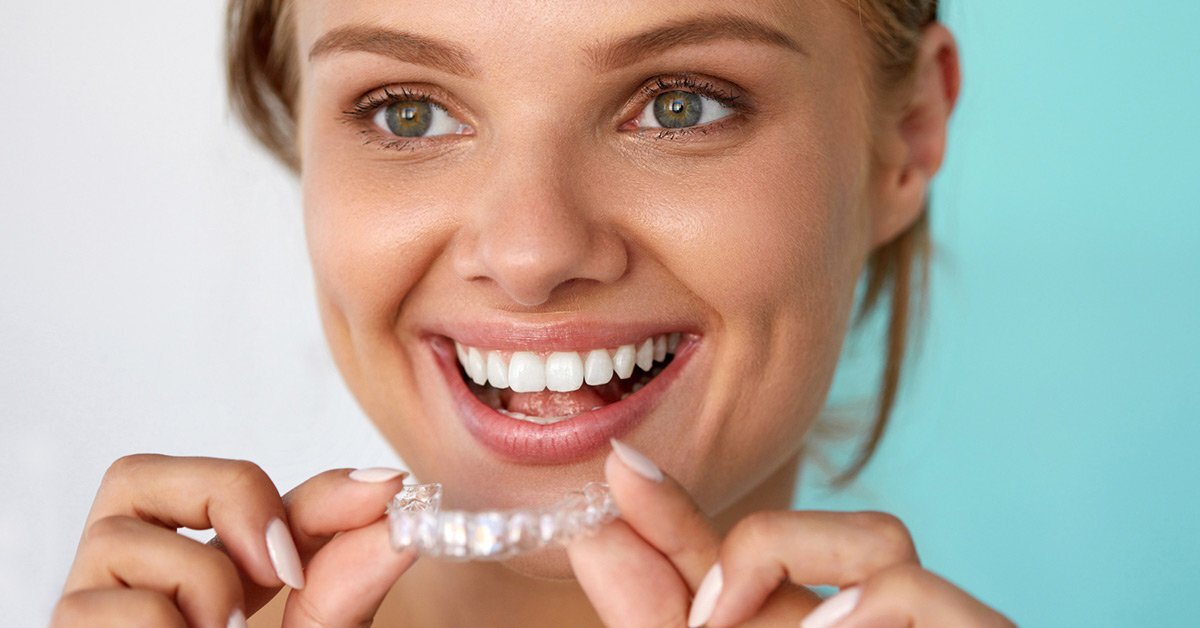
Invisalign aligners are orthodontic devices used for adjusting the alignment and structure of your teeth. They are transparent and easy-to-wear devices. Unlike dental braces, they do not involve brackets, wires, and any other restriction that causes discomfort inside your mouth. 

In modern dentistry, Invisalign aligners are used as an alternative to traditional dental braces. They treat all the orthodontic problems that dental braces can treat. However, Invisalign aligners are more effective than traditional dental braces. They effectively straighten your teeth, giving them a proper shape and alignment. 

Table of Contents

Benefits of Invisalign

The Step-by-Step Process to Design Your Invisalign

Dental Examination

  • X-Ray 

  • Smile Scanning

  • Overall Oral Examination

Preparing 3D Model of Invisalign Aligners

Manufacturing

Delivery

Benefits of Invisalign

Some of the most common benefits of Invisalign aligners are: 

Almost Invisible- Invisalign aligners are colorless and transparent. They are almost invisible and, so they cannot be noticed by a third person while you wear them on your teeth. 

No-Risk of Cut and Scratches- Invisalign is made of medical-grade plastic and does not involve brackets, wires, and any other hard or sharp-edged material. So, there is no risk of cuts and scratches on your gums, lips, and tongue.

Comfortable in Wearing- Unlike traditional braces, Invisalign aligners have smooth plastic and rounded edges, making them easy to wear for patients. 

Removable- Invisalign aligners are easily removable orthodontic devices. You can remove them during eating, drinking, and brushing your teeth. 

No Pain- Invisalign does not put intense pressure on your teeth, so you won't feel pain and discomfort while wearing them. 

Easy-to-Wash and Clean- Invisalign aligners are easier to wash and clean compared to traditional dental braces. To clean them, please follow the following steps:

  • Take a bowl of lukewarm water.

  • Add hydrogen peroxide.

  • Dip your clear aligners in the mixture of water and hydrogen peroxide for a couple of hours.

  • Lightly brush the aligners using a hydrogen peroxide-based cleaning solvent or baking soda. 

  • Rinse them and let them dry for half an hour. 

  • Your Invisalign aligners are ready to be used!

The Step-by-Step Process to Design Your Invisalign Aligners 

It takes lots of technology and dental expertise to design clear aligners that perfectly fit your mouth. A team of experienced dentists design cleaner aligners in four different steps that are as follow:

Dental Examination

When you visit a dental office for Invisalign treatment for the first time, you need to undergo a comprehensive dental examination process. This is the first and foremost step of the Invisalign aligners designing process. 

The dental examination for Invisalign treatment is conducted in two different steps that are:

X-Ray- In this step, your dentist scans your dental structure using an X-ray machine. They also take multiple photographs of your entire dental structure from various angles. These pictures and scanned images give your dentist a close look at the areas of your teeth that need to be corrected. 

Smile Scanning- This is where your Invisalign TX specialist closely analyses your smile. They use an industry-leading smile scanner to capture multiple photographs of your smile. 

The primary purpose of smile scanning is to detect if your incorrect dental structure has a negative impact on your smile. 

Overall Oral Examination- Your dentist also examines your overall oral condition alongside examining your dental structure and smile to detect any existing problem inside your mouth. 

Preparing 3D Model of Invisalign Aligners 

After analyzing scanned images of your dental structure and smile, a team of dentists prepares a 3D model of your first ever Invisalign aligners using 3D computer imaging technology. 

In this step, your dentist first sends the scanned images of your dental structure to the lab, where the Invisalign designing experts prepare a digital design for your clear aligners. They also design your smile transformation plan and show you how your smile will look from start to finish. 

This process often takes a bit longer than other steps as it is challenging to design your first clear aligners.

Manufacturing 

After preparing the 3D digital design of your first pair of clear aligners, a team of dentists proceeds further to manufacture them. First, the digital design of your aligners is sent to the manufacturing location, where the manufacturers prepare a basic design of your plastic aligners. Then, the aligners are smoothened and shaped according to your teeth' alignment so that they can perfectly fit over your teeth.

Lastly, the dentists test them to see if they are perfectly designed as per the digital design or not. 

Delivery

This entire process of Invisalign manufacturing may take anywhere from 2-3 weeks. Once your aligners are prepared, they are delivered to the dental office, where your dentists fix them over your teeth during your Invisalign treatment. 

In the end, we hope this piece of reading has been informative and valuable for you. For more informative articles related to Invisalign, dental care, and oral hygiene, stay in touch with us. 

What Are Different Alternatives To Braces For Adults?

shutterstock_1048792475.jpg

Valley Creek Dental Care always encourages good oral health in the patients coming to us for the treatment. From the eruption of the first tooth in infants to a full mouth of adult teeth, everyone should take care of their teeth and keep them healthy. Many come to us for orthodontic treatment, but they have fear in their mind of looking odd. They know the only solution to get perfectly aligned teeth and a beautiful smile is nasty-looking metal braces that look bad and painful. Being a reputable McKinney dentist, we consider it our responsibility to guide our patients and help them get rid of this fear by telling them about alternatives to braces.

Yes, it’s true. There are several alternatives to braces for adults, which they can choose to align their teeth and have a healthy yet beautiful smile. There are several reasons why adults look for alternatives when it comes to braces. The appearance of the braces is the first and foremost reason why adults try to avoid them. Clean, white, and shiny teeth help them have confidence when they smile. They feel better about their appearance, which is reflected in their confidence in others. Crooked, broken, scratched, and uneven teeth appear unpleasant, making it challenging to keep such teeth clean. Adults with rough or damaged teeth develop stains in the corners that are hard to reach and clean; therefore, causing an unsightly appearance.  

There are several health benefits of straight teeth. When you have correctly aligned teeth, you can actually experience better oral health because:

  • You can easily clean your teeth.

  • Your gums may support your teeth better.

  • You might not have to face risks of chipping, breaking, or wearing of teeth when they are fitted correctly.

  • The abnormal stress on your jaw caused due to misaligned teeth can be released quickly.

When you do not clean your teeth properly, then you could witness other problems start to develop. Tooth decay can ruin your teeth and cause severe problems with your jawbone. Therefore, you must get your teeth appropriately treated through orthodontic treatment. Apart from crooked teeth, other issues that you can fix with braces are:

  • Malocclusion or a bad bite

  • Disorders of jaw position or jaw joint

  • Headaches or earaches caused due to misaligned jaw

  • Difficulty in chewing or biting

  • Speaking problems

But if you have a fear of metal braces, there are several better alternatives to it such as:

  • Retainers: Retainers are usually removable dental devices used to position the teeth before or after treatment with braces correctly. These are a bit transparent version of braces that fit over the complete arch of the mouth. Retainers are the perfect example of how to achieve accurate positioning in place of braces. Orthodontists can easily attain minimal tooth movement using these devices. They are generally less expensive and easy to maintain than braces.

  • Headgear: Headgear is the most visible form of orthodontic treatment, which is the bad wrap. These are generally used to correct extreme overbites. This device exerts pressure on the upper teeth and jaw to put the teeth in a particular position. The dental header is not the preferred choice of adults because of its restrictive nature. But you need to wear it for a few hours a day. Typically patients wear dental headgears while they sleep at night. You have to remove them while playing sports, brushing your teeth, or eating.

  • Clear Aligners: Clear aligners such as Invisalign TX are the most popular and preferred alternative for adults. It can fix anything from minor overbites to underbites and other serious malocclusions. An orthodontist will provide you a series of clear, removable “molds” that you have to wear over your teeth. You have to wear them for at least 20 hours a day for 2 weeks till the time your dental expert moves on to the next series of molds. Each aligner slowly adjusts the teeth. Once it is done, then you can move through the next series. Invisalign is ideal for those patients who have gaps within their teeth.

  • Six Month Smiles: Six-month smile is a dental device. It includes a clear bracket with a wire that goes across the teeth. It is not actually visible and ideal to be used for mild corrective issues. Patients have to wear them for about six months. Sometimes, it may be longer depending on the patient’s dental structure.

  • Veneers: Veneers are popular among athletes, celebrities, and successful people. These are basically capped teeth ideal for dental patients with gaps, poor shape, fractured or contoured teeth. In this process, the dentist typically removes the enamel layer from the tooth and then fixes a veneer in place with the help of UV light-sensitive resin.

  • Accelerated Orthodontics: Accelerated Orthodontics is a fast-track orthodontic treatment in which micro-osteoperforation weakens the jawbones, which makes teeth loose enough so that they can quickly move when the dentist exerts pressure. This treatment works in tandem with clear aligners or a retainer for optimal results. The process increases cytokine production resulting in quick positioning of teeth.

Why Should You Consult a McKinney Dentist In Case You Have Doubts?

Valley Creek Dental Care always suggests you consult your nearby dentist before deciding not to go for braces. They will check your dental status and guide you on what can be done if you don’t want braces. They can also suggest alternatives through which you can resolve your dental problem.

How Your Invisalign Treatment Plan Is Made?

Everyone wants to have a camera-ready smile as it adds a charming effect to your overall appearance and spreads lots of positivity. But unfortunately, many people don’t smile due to various orthodontic problems, like misaligned teeth, crooked & crowded teeth, and bite problems. These dental imperfections spoil your smile entirely, affecting your overall appearance. 

Although these orthodontic problems are not severe dental conditions, they can significantly impact your mental condition and confidence. Therefore, you should overcome them as soon as possible. 

Many effective treatments and procedures are available in modern dentistry to treat orthodontic problems, including traditional dental braces and Invisalign. Both these treatments can help you effectively get rid of your dental imperfections. However, Invisalign is a much better option compared to dental braces. And there are several reasons behind it. 

In this article, we will comprehensively discuss Invisalign and how your Invisalign TX dentist makes your Invisalign treatment. Let’s get into it.

Introduction to Invisalign

Invisalign is also called clear aligners. It is a pair of custom-made plastic aligners used to adjust the alignment of your teeth. It is a lightweight, transparent, and easy-to-wear orthodontic device. 

In modern dentistry, Invisalign is considered the perfect replacement for traditional dental braces as it has the potential to treat many orthodontic problems, including: 

  • Overbite 

  • Underbite

  • Crossbite 

  • Open Bite

  • Gapped Teeth

  • Crowded Teeth 

  • Crooked Teeth

  • Straighter Teeth 

Why Invisalign? 

Invisalign gives you many advantages such as: 

Faster Treatment- Invisalign aligners are specially designed to fasten the treatment process. Generally, it takes more than one and a half years to treat misaligned teeth. But, Invisalign can help you get rid of your orthodontic problems within 6 to 12 months, depending on the complexity of your dental condition. 

Painless Experience- Unlike dental braces, Invisalign aligners give painless experience as they don’t contain metal or brackets that are harsh for gums. 

Easy-to-Wear and Remove Aligners- Invisalign is flexible, making them super easy to put on and remove, unlike dental braces fixed on the surface of teeth. This feature allows you to eat and drink comfortably and do your daily oral care practices properly.

Nearly Invisible- Invisalign aligners are colorless and nearly invisible. It means you can confidently smile wearing them in front of your friends and colleagues. It never lets you feel embarrassed when you smile or speak. 

Lesser Doctor Visits- Unlike dental braces, where you have to visit your dentist every 3 to 4 weeks, Invisalign frees up your schedule. You have to visit your dentist only once every 6 to 8 weeks as per your dentist’s advice.

All these advantages make Invisalign an obvious choice for you. It not only treats your orthodontic problems but also helps you comfortably survive the treatment period. 

Invisalign Treatment Plan

Your dentist makes your Invisalign treatment plan, depending on your dental condition. He combines his expertise and some powerful technologies to prepare a comprehensive digital plan to shape your dental structure and perfect your smile. 

This procedure is completed in three steps that are: 

Scanning of Your Smile and Dental Structure

In this step, a specialized dentist deeply examines your smile and dental structure using a scanner. It helps him get a detailed 3D image of your teeth. With a clear picture, the dentist finds out the areas in your dental structure that need significant improvement. 

Moreover, he may ask you lots of questions related to your dental condition and experiences. For example: 

  • Do you often feel pain? 

  • Do you often struggle to chew or eat?

  • Do you struggle while speaking?

  • How do you take care of your teeth? 

  • Have you ever undergone dental surgery? 

You need to correctly answer all the questions asked by your dentist to help him make a better Invisalign treatment plan for you. 

Preparing the Roadmap to Your New Smile 

This is where your dentist prepares a digital plan for improving your dental structure and smile. He works with other dentists and technology experts to design a pair of clear aligners that can be perfectly fitted on your teeth surface.

Once they have designed the aligners, they perfectly place them on your teeth' surface. Since then, you need to wear them for at least 20 hours a day for faster treatment. It will take from 6 months to 18 months to get your new smile, depending on the complexity of your dental structure. 

The dentists will also teach you how to gently wear or remove the aligners so as not to face any problems during your entire treatment period. Moreover, they will give you some important instructions that you must follow throughout your treatment period strictly. 

This step is the most crucial as it prepares the roadmap to your new smile. 

Previewing Your New Smile 

This is the ultimate phase where you meet your new smile- the one you have dreamt of. It may take several months to reach this phase, but it will be one of the most satisfying things in your life. 

In this phase, your dentist will preview your improved dental alignment and new smile to ensure if they are perfect. He will scan your teeth, and once satisfied with your smile; he will free you from your Invisalign aligners. 

This is how we make Invisalign treatment plans for our patients. For more information related to dental care and treatment, stay in touch with us.